By Forsyth Thompson
New Zealand agriculture is staring down the barrel of a massive generational shift. Leading firms are positioned to steer the coming succession conversations, benefiting from those high-value, long-term relationships as a result. So what are they doing differently?
For a New Zealand farming family, succession is one of the most important conversations that will ever take place.
It can be a sensitive topic, often involving many family members (and other members of the wider farm team), a lot of money, and add to that the complexities of human relationships. Modern accounting tools tend not to support this highly collaborative process — making it harder for agri-accounting firms to lead the conversation in a structured, data-driven way.
But some firms across New Zealand have worked out how to do it, and it’s helping them grow their advisory business.
Diprose Miller is one such firm. Here’s how they do it, what you need to know — and why now is the time to think about it.
Succession Planning in New Zealand: Why Now
Over the next decade, over 17,000 New Zealand farm and orchard owners, more than half the country's total, will turn 65. Between them, these farmers hold a conservative $150 billion in farming assets (Rabobank).
While not everyone will retire straight away, it marks the beginning of what is set to become an enormous generational shift across the country.
But Most Farms Aren’t Ready
Rabobank’s survey shows that a little more than a third of farming businesses have a documented succession plan, at around 36%. Just less than a fifth have discussed succession but documented nothing, while the remaining 47% haven’t discussed or started planning at all.
Yet, we know that succession is a process which can take years — even as much as a decade.
That means if New Zealand is only 10 years from the shift starting, and it could take that entire time to plan and implement succession appropriately, then most farming families in the country are already up against a clock that they might not know about.
How Diprose Miller Approaches Succession
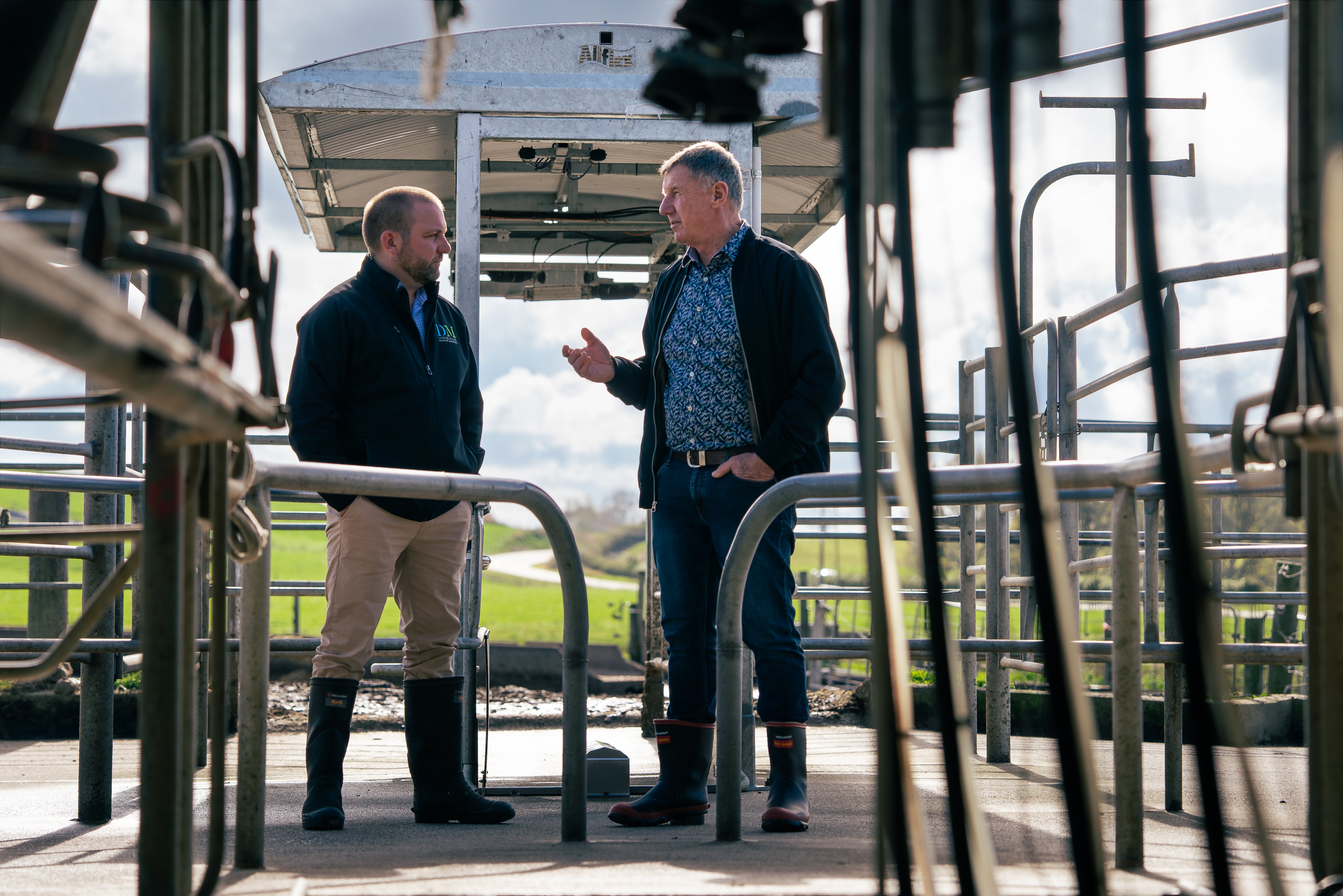
Diprose Miller is a Waikato-based firm with offices in Te Aroha, Morrinsville, and Thames, and a client base that's 60–70% dairy. Ed Wagstaff, a director at the firm, leads much of its succession work.
In a recent interview with Figured, he explained the firm’s approach to succession:
- Get in early. Ed sits down with clients on succession before there's a trigger event forcing the issue, rather than waiting for a health scare, a bank review, or a family disagreement.
- Bring in the whole family. The plan covers more than the farm's numbers. Ed works through what each generation wants for their family and their future, then builds the financial plan around that.
- Review regularly. Plans get revisited at least once a year, so the numbers and the goals stay aligned as circumstances change.
- Help into ownership. Diprose Miller's contract milker accelerator program treats new contract milkers as future owners from day one, forecasting and reviewing their progress every two months.
The key is that Diprose Miller doesn’t treat succession as a one time event, where everyone should expect to get what they want. Ed and his team see it as a moment of change in a bigger plan, where each family member can begin or accelerate their broader life plans — whether that’s retiring, moving into full farm ownership, or focusing on building their dream lifestyle.
Importantly, this isn’t a process done on old spreadsheets. More on that below.
Case Study: Passing to the Next Generation
Waikato farmer Graeme Shaw has a target of owning no farms by the time he’s 70.
He runs Clover Hills Ltd with his wife Margaret, a Te Awamutu dairy farm they bought in 2014. They’re also a long-time client of Diprose Miller.
Their daughter Marie and son-in-law Sam Ravenscroft came on as contract milkers and have since built up a 50% ownership stake in the business. The plan is for them to take over the remaining half within the next four to five years.
"Building a good team around us has been critical to our success," said Graeme. "It's vitally important to be able to keep everyone on the same page, and part of the success for succession planning is having everyone in the loop and heading in the same direction."
Ed describes the role of the adviser in this relationship as making Graeme’s knowledge visible to the rest of the family, using Figured as a platform to help.
"Figured has helped to be able to draw that out to make it visible to everyone,” he said. “Without that one central repository for all the information, then it would be a lot more of his time to be able to pass that information on. Whereas now with Figured, it's all there, and it's all accessible from anyone that needs it."
Read more: Diprose Miller and Clover Hills Ltd
Why This Farming Team Chose Figured for Succession Planning
Succession in agriculture involves a lot of moving parts, and generic accounting tools (like spreadsheets) just weren’t built to handle it.
The generation handing over, the generation coming in, accountants, lawyers, the bank … everyone needs to work from the same numbers, often at the same time, and those numbers need to be current. Plus, people have to trust that they’re accurate. Spreadsheets are a great tool, but version control issues start to become a real problem when too many people are involved, and they can break, drift, or go out of date without anyone noticing.
That’s why Figured does things differently. Purpose-built for agriculture, it’s the financial management platform that brings the full farm team together over a shared, current position — connected live to your accounting platform, the farm’s production apps, and even the IRD.
1. Live data as the foundation. Production and financial data flow into one place in Figured, visible to your firm, the farmer, the family, and the bank when invited, without anyone assembling a fresh snapshot before each conversation.
2. Scenario planning for every pathway. Different ownership structures, timelines, and handover pathways can be modelled side by side from the farm's actual financial position, so a family can compare a staged handover against an immediate one using real numbers instead of assumptions.
3. Detailed reports done fast. Put together detailed farm reports for the family, bank, or anyone else who needs to see the numbers, in a highly visual, reader-friendly format, with your firm’s branding on every page. Advanced AI writes the commentary for you, in the level of detail you want to share, saving you time.
4. Built to help NZ agri-accounting firms grow. Meeting early and reviewing often can only scale across a full client book if the numbers are already live and shareable — otherwise you’re rebuilding for every meeting, and that can take hours.
Backing the Next Generation Into Ownership
The traditional road of moving from contract milking to full farm ownership has been getting harder for years — with land prices climbing faster than the equity most farms can build through wages and stock.
In fact, the Kellogg Rural Leadership Programme projects a capital shortfall of $110–125 billion by 2050 between what New Zealand farmers will have and what they'll need to own the farms they work (Rural Leaders).
It’s one reason that Diprose Miller offers its contract milker accelerator program, and why Figured launched the first-of-its-kind Farm Progression Loan.
Delivered via Oxbury Agricultural Finance, the Farm Progression Loan lends against a farmer’s performance rather than asset values alone. For the first time, NZ's best dairy farmers can access lending terms that reflect their capability, not just their balance sheet.
Learn more: Farm Progression Loans
Growing Your Agri-Accounting Firm
New Zealand farming is about to change hands, and the majority of farm families — those without a plan — will be looking to their local agri-accounting firm for help.
This represents a significant growth opportunity, and a chance to expand from compliance services into more valuable advisory, and the long-term, year-round relationships that come with it.
Advisory in numbers:
- Accounting firms that add advisory see revenue uplift of up to 198%, or up to 327% for multi-entity clients. Plus, when receiving only compliance services, farmers rated their accountant as ‘really valuable’ just 23% of the time. That jumped to 83% for those with planning and budgeting services (Xero/Figured research).
- It also helps to attract better talent: 91% of accounting professionals believe graduates are more likely to join firms that are already advisory-led and technology forward (Karbon).
However, while NZ farmers will need your support in the coming years, they might not know to ask for it. Across the country, farm teams are going without services they’d find really valuable, not realising they're there. Explore this problem more in our next article, “What Farmers Want From Their Agri Adviser - But Don’t Ask For”.
Or to learn more about solving planning challenges in NZ dairy, download our free Dairy Farming Insights Brief.