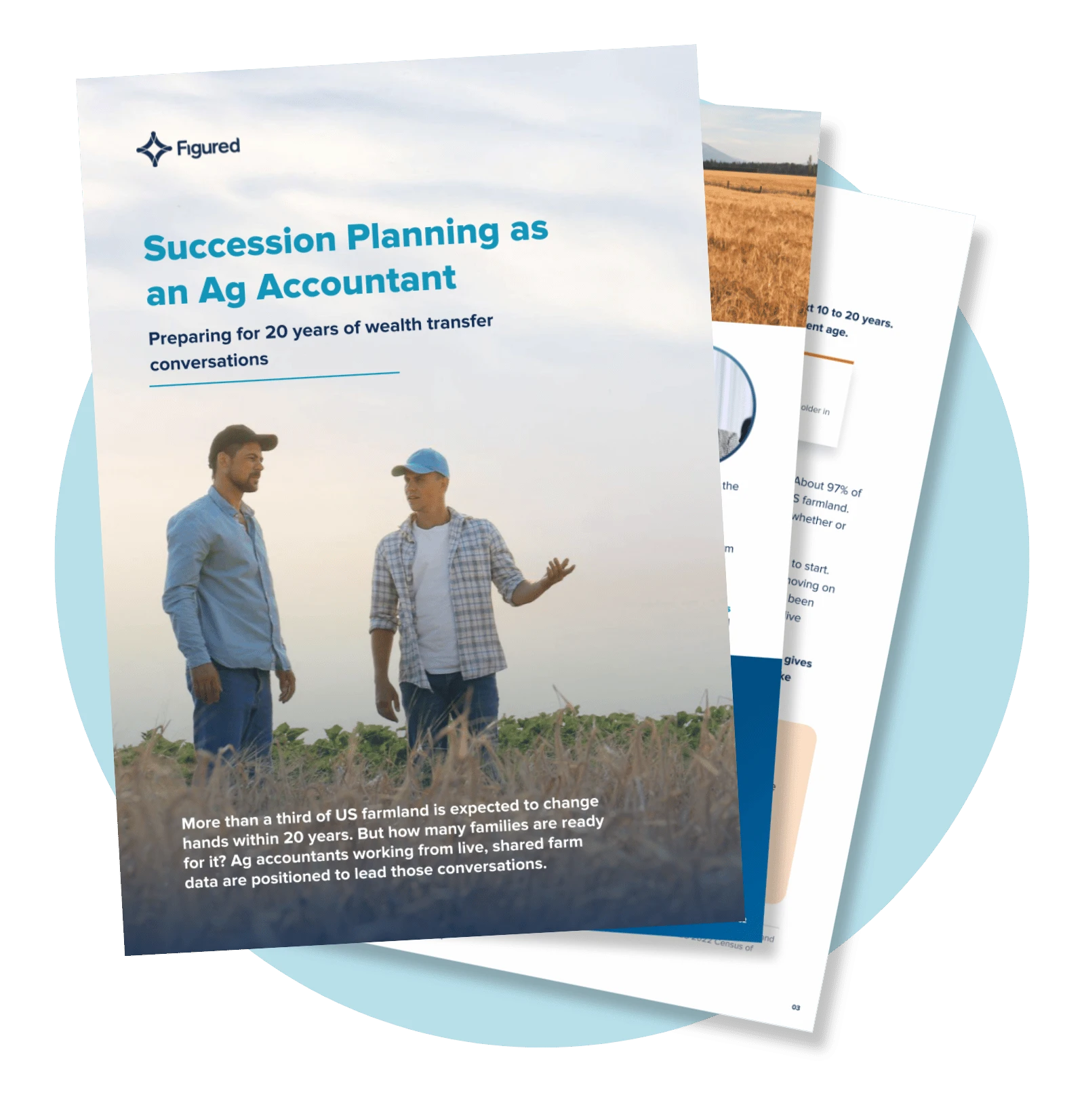
A succession wave is coming. Within 20 years, 78% of US farmers will be 65 or older. Many already are. But conversations about succession are difficult to start, complex to manage, and can involve a lot of different stakeholders. This guide shows why spreadsheets struggle with that job, and how trusted advisors can lead the process with a shared, live platform.
Federal estate tax pressure has eased. The hard questions haven't.
The One Big Beautiful Bill Act set the estate tax exemption at $15 million per person, with no sunset date. For most farm families, that eases pressure on the federal estate tax side of things.
But succession is a separate job, and the hard questions still need an answer. Who runs the operation next, how the retiring generation keeps an income, and what's fair to off-farm siblings all still need working out — a process which can take the better part of a decade.
Why Read This Guide
Trusted advisors often see succession coming years before the family raises it. Learn why an early start gives families time to test their options and bring the next generation in gradually, and how to be the one who gets it moving.
Succession brings in the next generation, their spouses, attorneys, and the lender, and not all of them live nearby. See how a shared platform gives each person access suited to their role, so no one is waiting on an emailed spreadsheet.
In a conversation this personal, the numbers need to be current and they need to be right. Find out how live accounting and production data can replace fragile formulas, so every option the family weighs starts from the farm's actual position.
Sources: American Farmland Trust, Farm Legacy; USDA ERS, America’s Farms and Ranches at a Glance (2025 edition); Figured analysis of USDA NASS 2022 Census of Agriculture data

It was pretty easy for us to make a new scenario, update a few assumptions, and within a couple of minutes we had a projected cashflow and balance sheet for the year — and we were able to talk to the lender the same day.