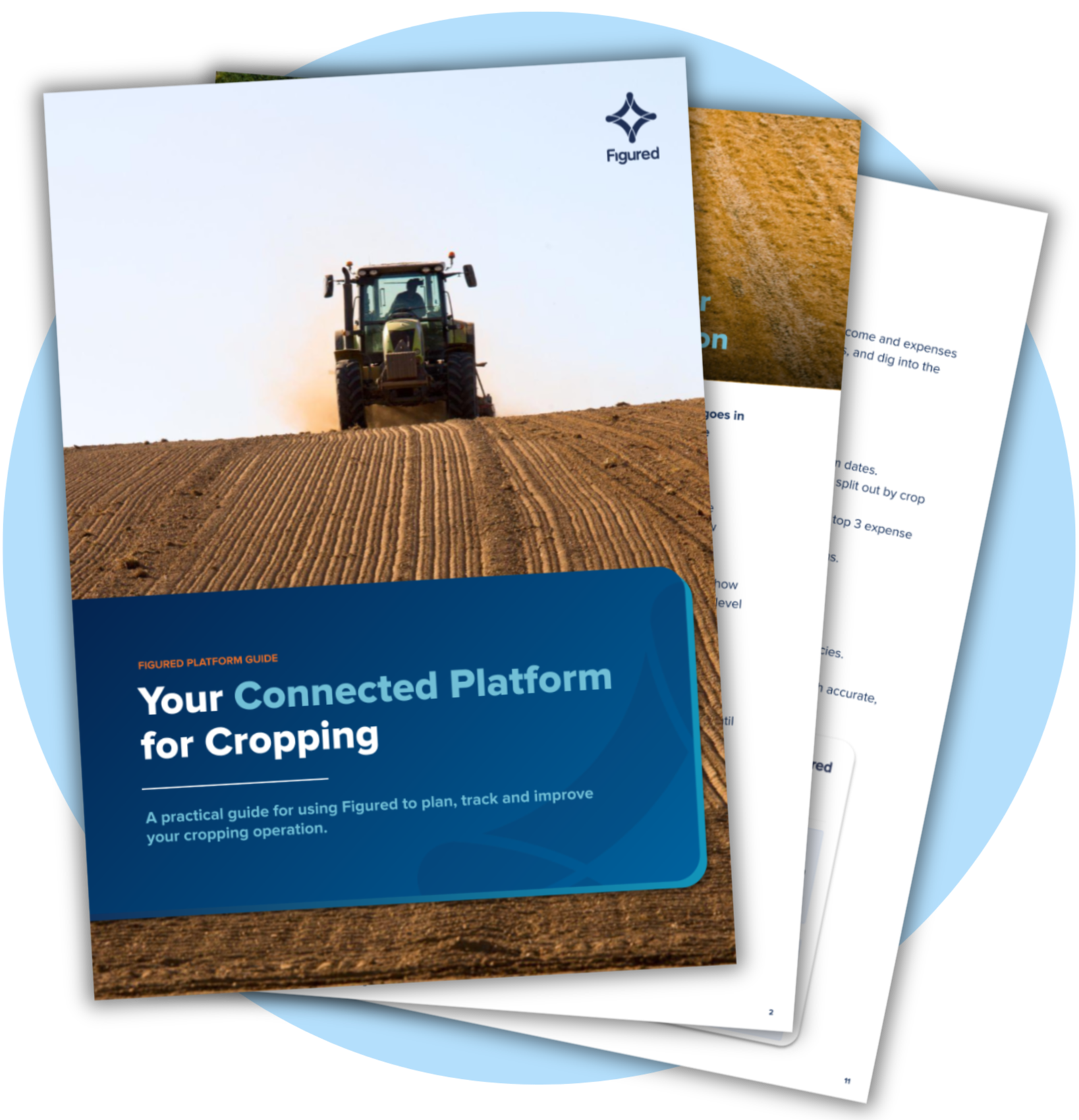
The practical guide to planning, tracking and improving your cropping operation with Figured. Inside, you'll see how the product helps you bring together production and financials, build live forecasts, and track performance crop by crop.
Whether you're growing grain or feed, or running a mixed operation, this guide shows you how to move from disconnected data to a connected, profitable cropping operation.
What You'll Learn
Bring together your paddock activity, inputs, harvest and financials — without spreadsheets or double entry.
Create live, connected forecasts that reflect your actual crop business, cash flow and seasonal timing.
Use reports built for cropping to understand costs, compare performance and back decisions with numbers.
Loop in your accountant, adviser or banker with one central view.
A walkthrough of the platform and the parts of the product that support a connected, confident approach to cropping:
Figured connects directly to Xero, MYOB or QuickBooks Online and imports your actual income and expenses automatically. Transactions are assigned to the right crops or categories, so there is no double entry and no waiting on end-of-month reports.
Every season brings hundreds of transactions, from fertiliser and fuel to freight and storage. Unless you know which crop those costs belong to, it is hard to see what is actually making money. The Allocator pulls transactions in from your accounting software and assigns each one to the right crop, field or product — with rules to automate the repetitive ones.
You don't have to do everything at once. Many farmers start small and expand over time — set up your crop season trackers and pull in actuals if you want better visibility of costs and income; use the Planning Grid if you need a forecast or budget; automate your reporting if getting clear reports for the bank or your adviser is the struggle.
Most farmers set Figured up alongside their accountant or adviser, who can help configure the farm and validate the setup. You will get value while you are still learning.
.svg)