When You Need Your Numbers, Figured Is There
Plan around what you’re growing, what it costs, and when the money comes in. Reforecast whenever conditions shift — with no fixed financial year constraints.
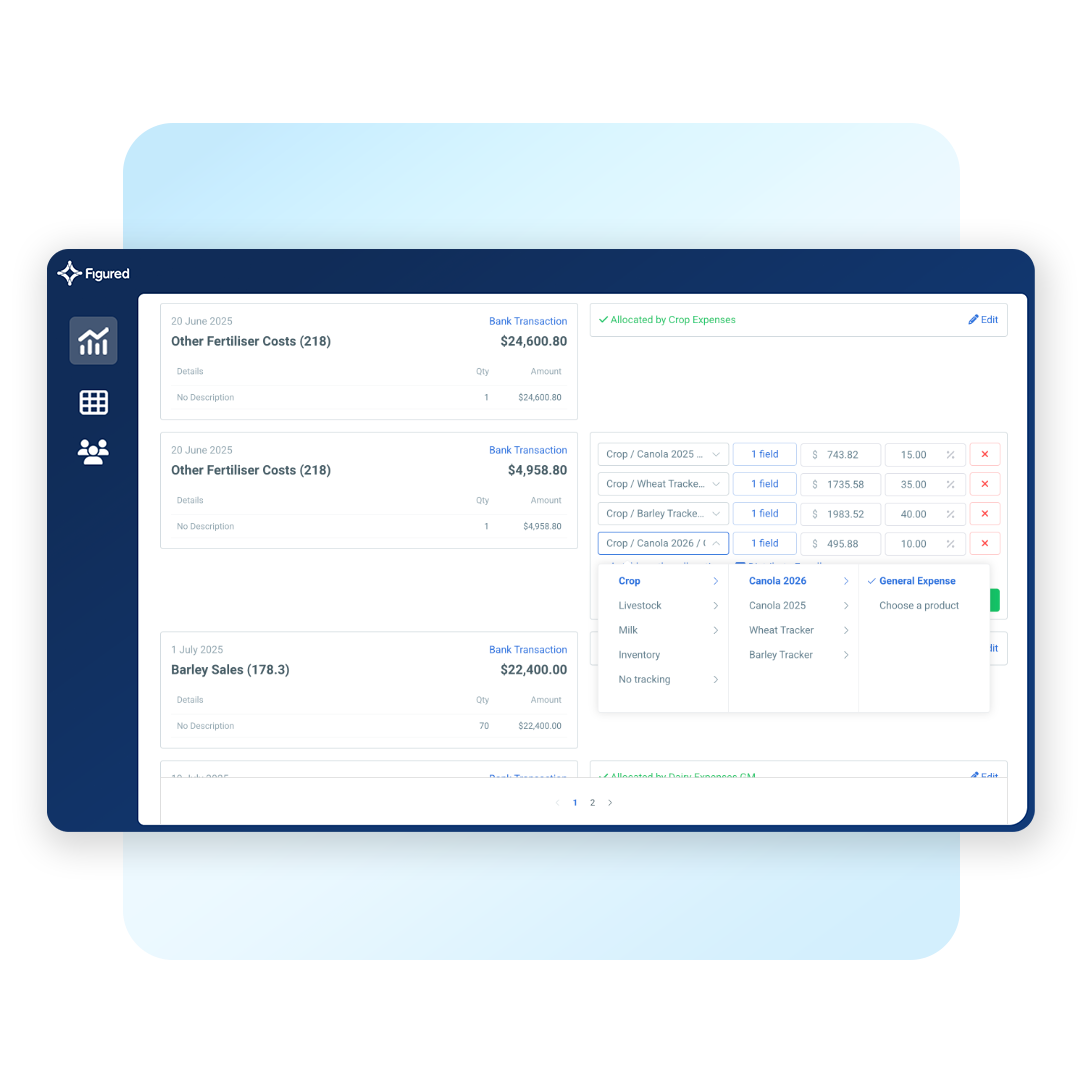
Figured breaks down income and costs by crop type and season, on a per-hectare basis, so you can base rotation decisions on what each crop actually returned.
Keep your harvested crops and on-hand inputs in a single current view, valued at cost. By EOFY, valuations follow from records you’ve been keeping all along.
Intelligent, AI-powered systems are woven naturally into Figured, like report commentary that writes itself. We’re making the platform better and faster, with more in development.
“I only see my numbers once the crop comes in.”
In crop farming, the season’s financial picture typically only comes together when harvest arrives. Most farmers don’t take stock of their picture until after that moment.
The problem, though, is that decisions which shape profitability don’t wait that long. They land throughout the year, when the numbers aren’t ready, and so most of the time farmers have to make the big calls without a clear financial picture.
Except, some Australian crop farmers are doing it differently. They’re working on a platform that’s current throughout the season, with crop costs allocated and inventory tracked down to the field and crop type level. When a decision comes up, the information they need is already there.
What You Get
Figured is built to give crop farmers access to everything they need in one place, with tools to plan, model, report, and make the season’s big decisions.
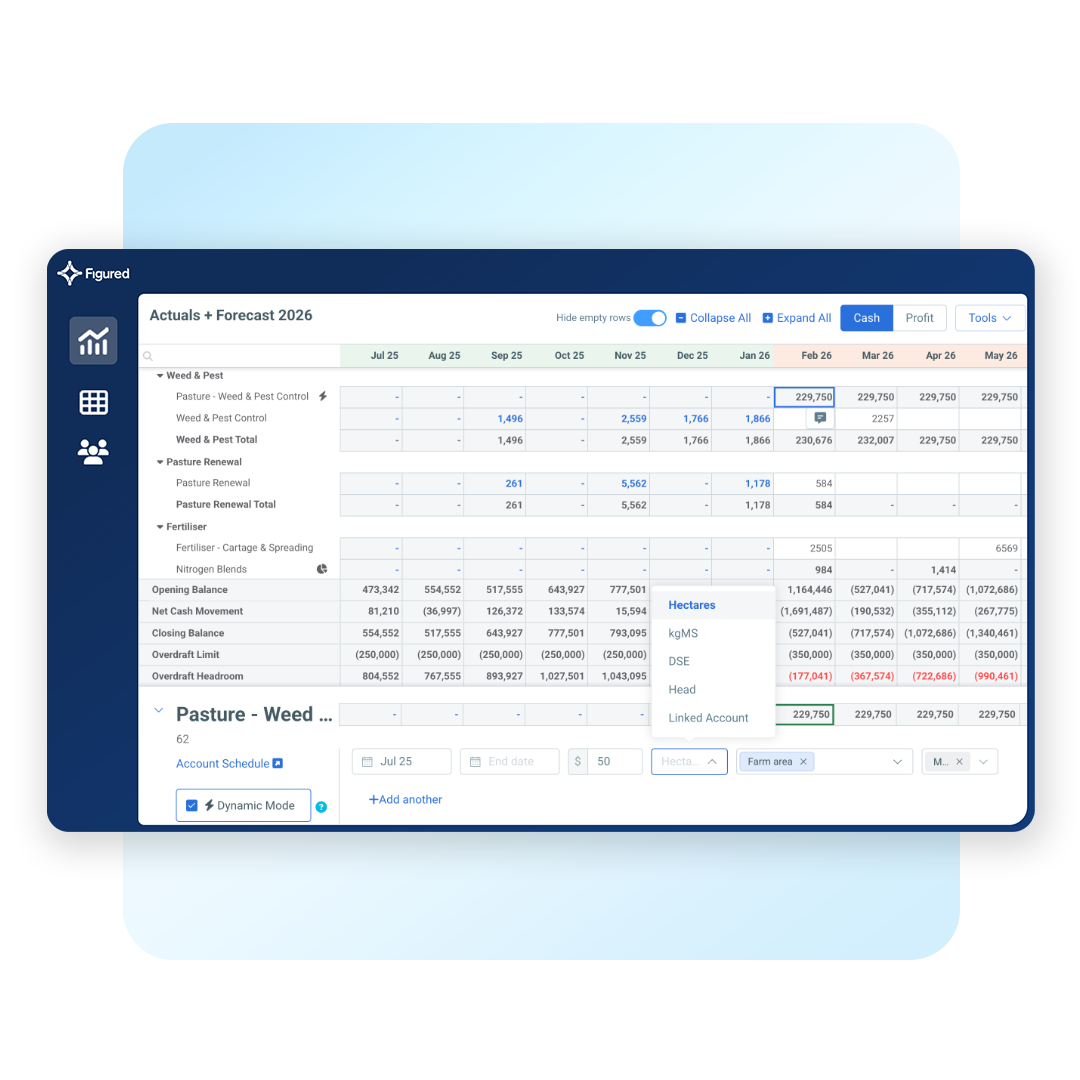
Start with what you’re planting, what it costs to grow it, and what you expect at harvest, then connect that to your actual cash position. Figured’s Planning Grid works the way cropping farms actually run, with no fixed financial year constraints, so you can plan the way you want to.
Adjust your yield assumptions mid-season, update your contract prices, or reforecast after an input cost blowout, without spending hours in the office. Save snapshots at regular intervals, so you have a clear record of how the season evolved against what you expected.
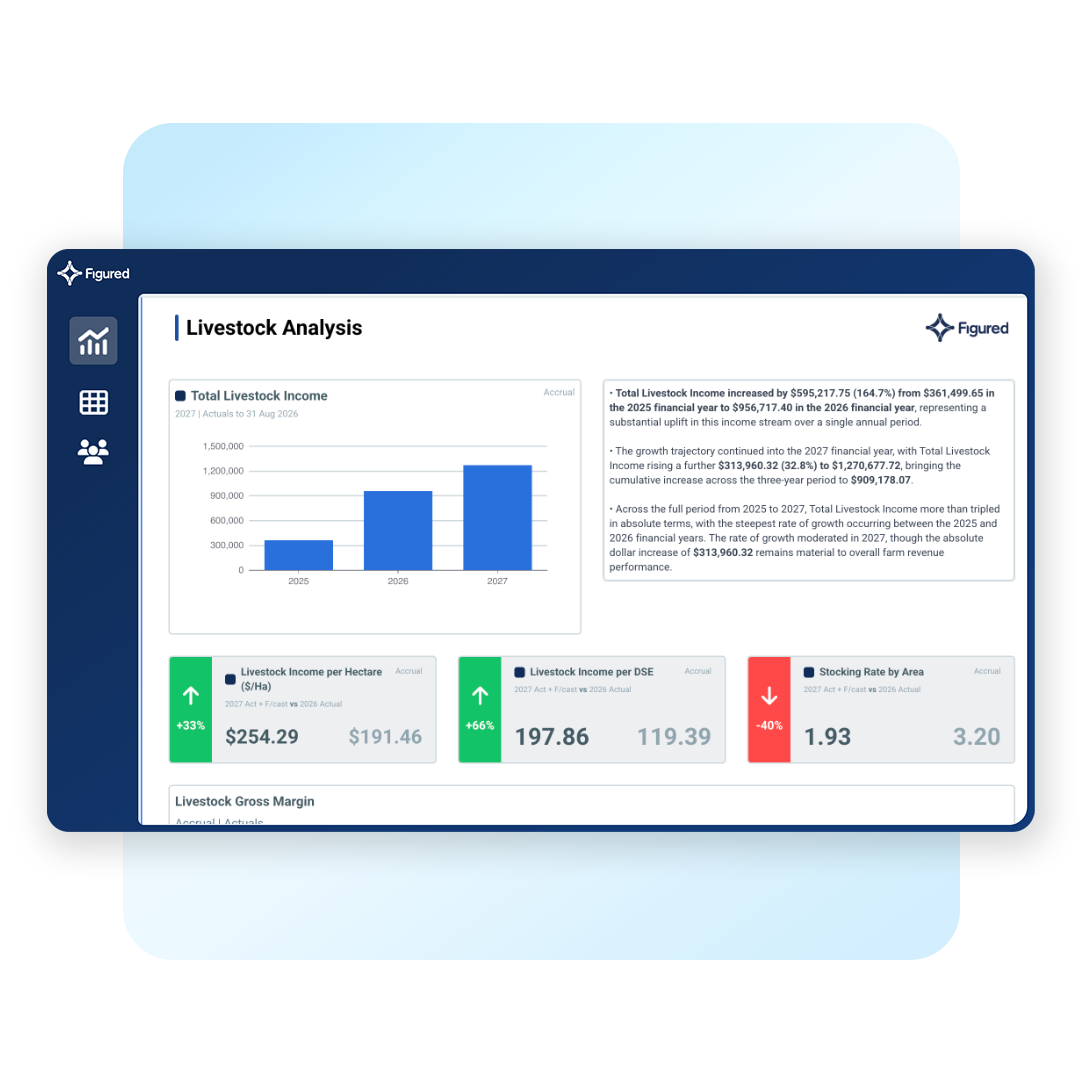
When it’s time to refinance, report to the trust or governance board, or fetch this year’s results for a planning conversation, Figured gives you and your accountant fast, custom reports drawn from live farm data.
Create bank packs instantly from your Crop and Inventory Trackers, or customise a highly visual template and reproduce it as many times as you like — with the data updating itself. Then, Auto Analyst adds the commentary for you, saving you time writing it all up yourself.
The Crop Tracker is where your production records and your financial management come together. Record what you’re growing, what’s been harvested, and what’s been sold. The financial impact flows through to your budget automatically.
The Inventory Tracker keeps your harvested crops and purchased inputs in a single connected view, valued at cost, so you know what’s on hand at any point in the season — useful for your own planning, and essential for EOFY valuations.
If you’re using Agworld for agronomy planning, that data flows into Figured as your crop season forecasts, so your agronomic plan and your financial plan work from the same starting point without entering information twice.
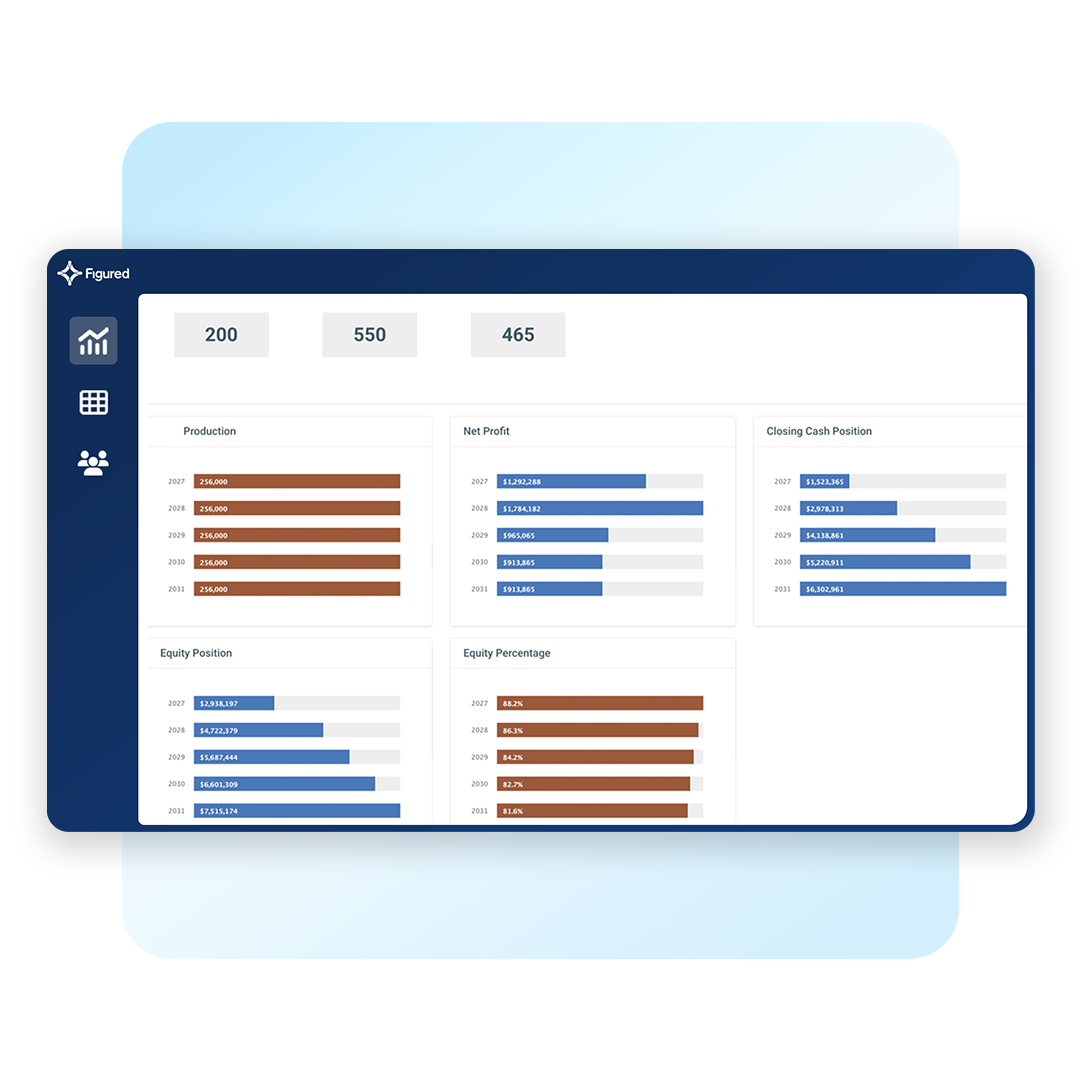
The decisions that shape a cropping operation’s future deserve more than a conversation at tax time. Scenario modelling in Figured lets you and your accountant map different pathways in financial terms before you commit, so you can see what the operation looks like under different debt structures, land arrangements, or ownership models.
I didn’t have a lot of confidence in my spreadsheet and my formulas. Whereas with Figured, I know they’re all over that. It gives me a lot more confidence to know that the actual figures being pulled through are correct — and they’re getting pulled through in real time.

With Figured, I feel like it gives you a bit more clarity going forward. Running the numbers takes the guesswork out of forecasting — if you change one figure, it flows through to the next, so you’re not wondering if your spreadsheet formula’s correct. My advice for other farmers: get on board, have a try. It’ll give you a lot more confidence and a lot more time.

If you’re not measuring what you’re doing, you can’t manage it. And Figured has certainly given us a greater ability to manage things, because we are measuring so much more.

Working Together
Integrations
Xero
Accounting
MYOB
Accounting
AgriWebb
Farm Management
Agworld
Farm Management
FarmIQ
Farm Management
Xero
Accounting
MYOB
Accounting
AgriWebb
Farm Management
Agworld
Farm Management
FarmIQ
Farm Management
Xero
Accounting
MYOB
Accounting
AgriWebb
Farm Management
Agworld
Farm Management
FarmIQ
Farm Management
Trev
Farm Management
Farm Source
Dairy Processors
Synlait
Dairy Processors
Open Country
Dairy Processors
Miraka
Dairy Processors
Westland
Dairy Processors
Trev
Farm Management
Farm Source
Dairy Processors
Synlait
Dairy Processors
Open Country
Dairy Processors
Miraka
Dairy Processors
Westland
Dairy Processors
Trev
Farm Management
Farm Source
Dairy Processors
Synlait
Dairy Processors
Open Country
Dairy Processors
Miraka
Dairy Processors
Westland
Dairy Processors
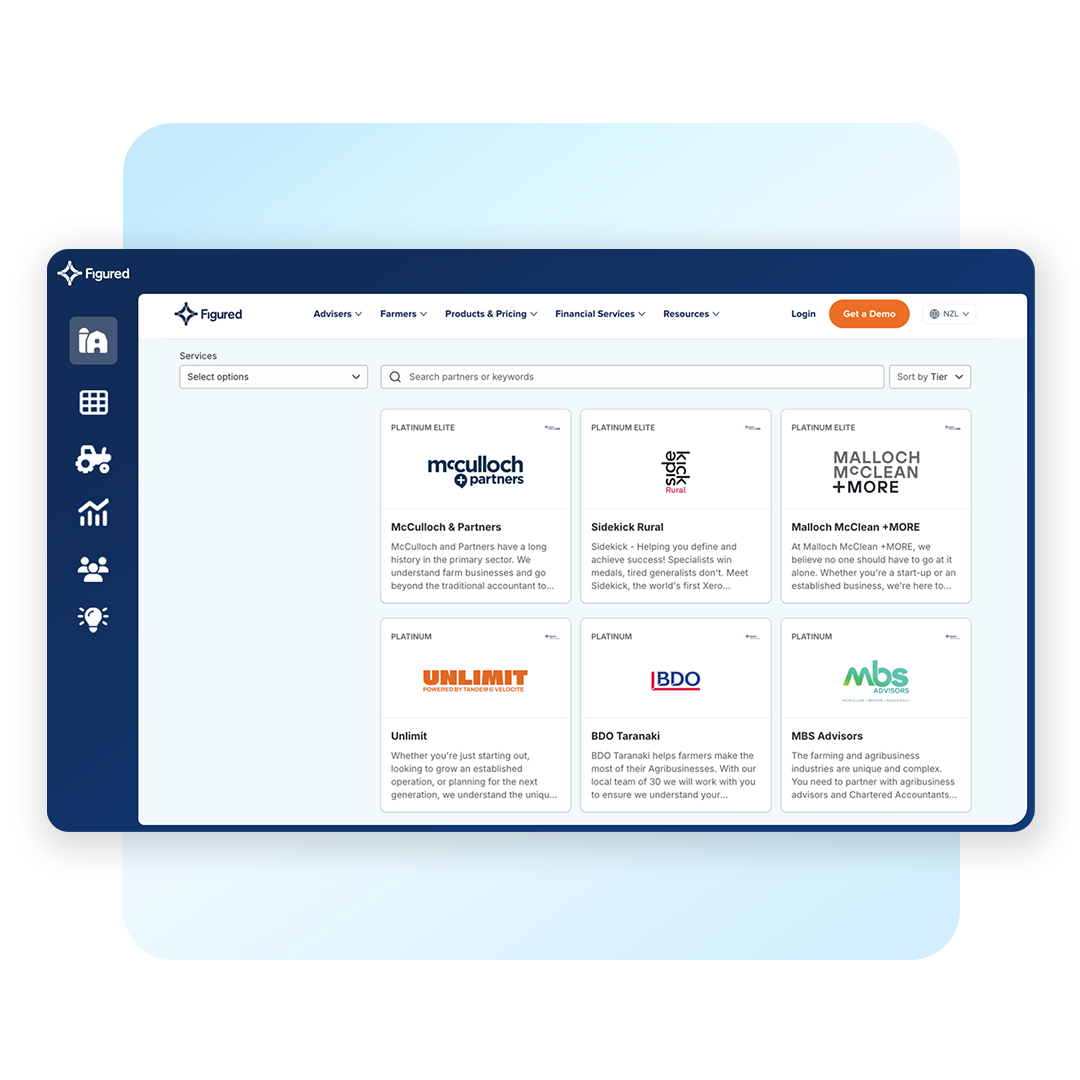
Find a Figured Adviser
Our network of Figured-certified agri accountants and advisers can help you get set up, manage your farm financials, and make better decisions — year-round.
Find Your AdviserPartnered with Australia’s top agri advisory firms

Questions
No, Figured does not replace Agworld. It sits on top.
Agworld is where your agronomic work lives, including spray records, field plans, recommendations from your agronomist, task management, product applications, and so on. Figured adds the financial layer, tracking what each crop costs to produce, what it returned, and whether the whole operation is on track against your plan.
A live integration syncs the two together. Agworld data flows into Figured as planned crop season information, eliminating the need to input the data twice. Your agronomist keeps working in Agworld the same way they always have, and Figured picks up what’s relevant on the financial side.
If you’re already using Agworld, adding Figured doesn’t change your on-farm workflow — it adds a financial view on top of what you’re already recording.
While you can absolutely use Figured by yourself as a farmer, we do recommend checking to see if your accountant or adviser is already using it.
Getting the Crop and Inventory Trackers set up correctly, connecting to your accounting software, and making sure the opening position is right all benefit from someone who knows the platform well. Trying to do it without an adviser tends to mean a slower start and more things to unpick later.
Once you’re set up, though, you have your own access to the platform and can see your financial and production data at any time — not just when your accountant runs a report. The goal is for both you and your accountant to have access to the same live data, which you can view at the same time.
Don’t have a cropping adviser? Check out our trusted partners: Find an Adviser
Figured connects to Xero, MYOB, and QuickBooks Online. If your farm accounting runs through any of those three, you can use Figured on top of it.
If you’re on an alternative accounting system, or using spreadsheets or paper-based records, you’d need to migrate to one of the supported systems first. While migrating to a modern platform can seem daunting, most farms never go back — there’s a reason they’re so popular.
It may help to talk to a Figured-enabled accountant about what you need to do next to upgrade your accounting system, then get onto Figured.
Yes. Banks want more than EOFY accounts, they want forward cashflows, a current debt position, and a financial picture that’s been kept up to date throughout the season. Figured produces all of that from your live data.
When a lending conversation comes up, you and your accountant can update assumptions, run a scenario at a different price or yield assumption, and have something credible ready in hours, if not minutes. Some Australian banks are already looking more favourably at farming clients who can bring this kind of visibility to a review.
Figured can help you build your relationship with the bank, too. The farmers who get the most from their lender give them visibility throughout the year, and often include them in regular farm meetings. With the bank on your farm team throughout the year, they don’t need to be caught up every time you bring them into the conversations — making it easier to have the big conversations, and get the outcomes you need.
Your job is keeping the underlying data current — reconciling bank transactions in Xero or MYOB and keeping your crop records, input purchases, and inventory movements current. The more current that is, the more useful Figured is for both of you.
Your accountant’s job is to work with that data inside Figured. They configure the Crop and Inventory Trackers, manage the planning and reporting, and handle the EOFY financial work: inventory valuations, accruals, and the reports that go to the ATO and the bank.
When both sides have done their part, the conversation between you shifts from what happened last year, to what’s going on right now and, more importantly, what might happen next.
Figured is a monthly subscription, and the cost depends on which product tier your accountant sets you up on — Farm Reporter for reporting, or Farm Manager if you want planning and forecasting on top of that.
Most farmers don’t manage the subscription directly. Your accountant or adviser handles the setup, and depending on how they work, they’ll either pass the cost on to you separately or fold it into your advisory fees. The best person to ask is your accountant — they can tell you exactly what applies to your farm before you commit to anything.
If you want to see current pricing for your market, it’s available on our pricing page.