For Agri Accountants
The World’s Largest Farm Financial Management Platform
There’s a reason thousands of agri-accounting firms across Australia, New Zealand, the UK, and the USA run their farming clients through Figured. More than 35,000 farms trust the platform — and the advisers who use it every day know exactly why.
“Farm numbers come in shoeboxes, and that’s how it’s always been.”
Farm compliance has a lot of moving parts to track. None of the work is conceptually difficult, but assembling it all on out-of-date systems across a full client base — especially where the numbers aren’t even digital — is a whole other story.

Xero alone wasn’t built to fit the changeability of agriculture, and spreadsheets certainly weren’t. They don’t link invoices to production activity, and they don’t fit into farm seasons, so there’s always a gap come EOFY.
But, a growing number of Australian accounting firms are working differently. They run their clients on a platform that keeps the whole farm financial picture in one place. Actuals from Xero and live production numbers are kept up to date all year, with less manual input, so when EOFY arrives, the picture is already assembled.
Year-Round Tracking
Figured is where farm accountants find year-round visibility. Track what’s relevant for each farm type across your client portfolio, with budgets and valuations updating automatically through the season based on stock movements, inventory changes, market shifts, and all the other factors that affect farm compliance figures each year.
Figured’s integrations with key farm apps like AgriWebb and Agworld ensure there’s less manual input on the farmer side too, and all the relevant information posts back to your accounting software to keep both sides up to date.

Livestock Valuations
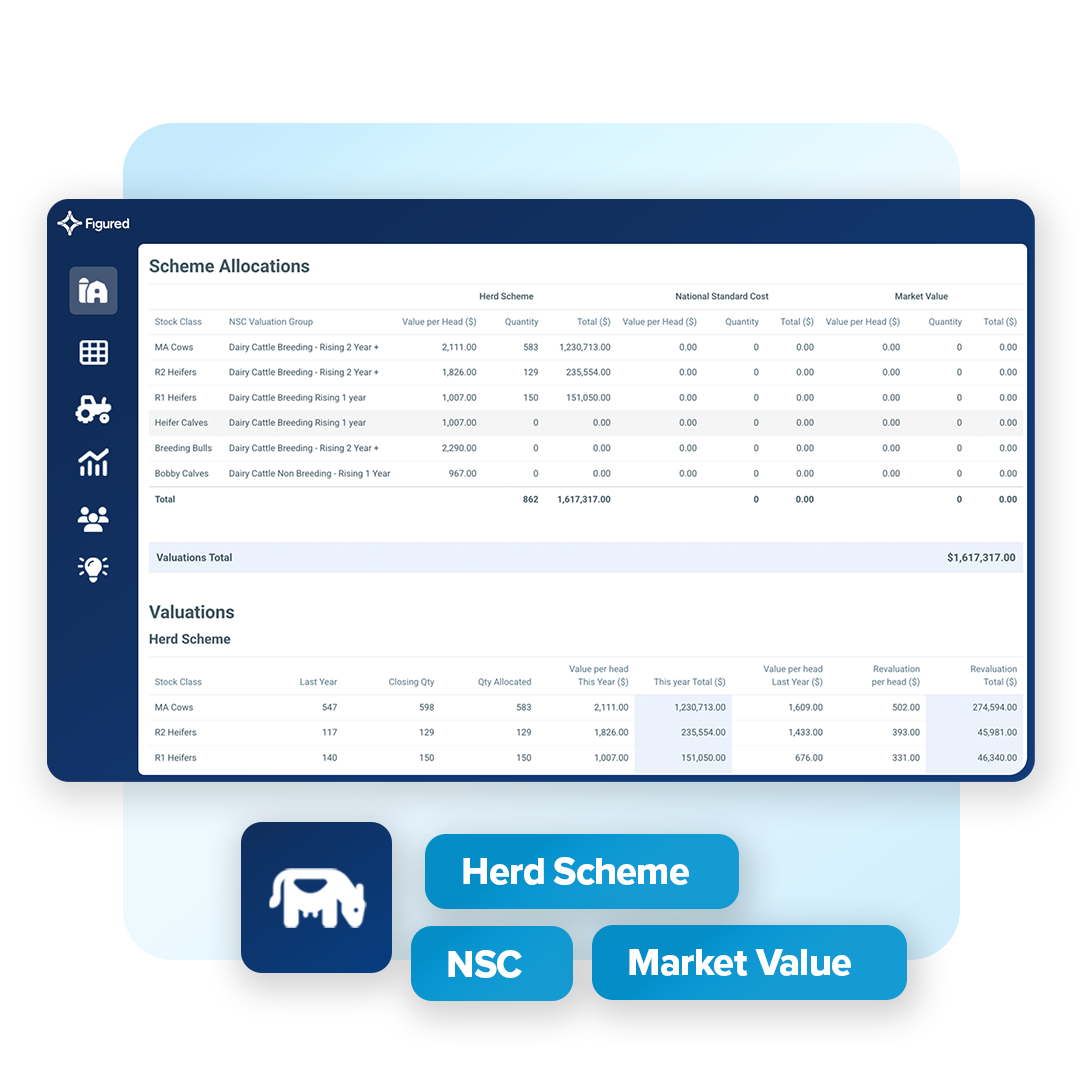
AgriWebb-fed movements keep every stock class reconciled as they happen, so the closing numbers your practice needs for EOFY are built on a position that’s already accurate, whatever valuation method you apply.
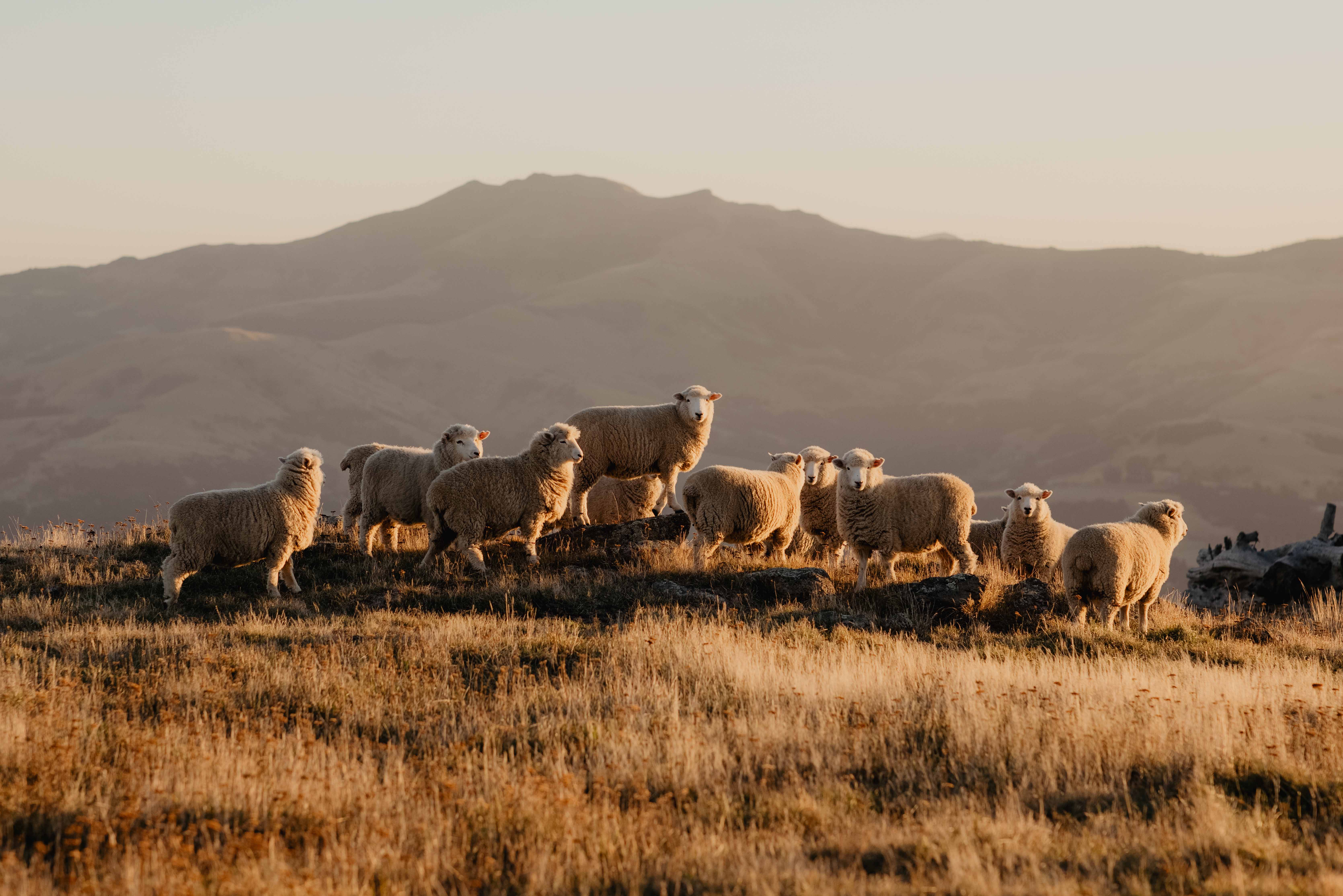
For Australian livestock operations, Figured supports the full range of stock classes for sheep, beef, and mixed livestock farming.

Tracking Actuals
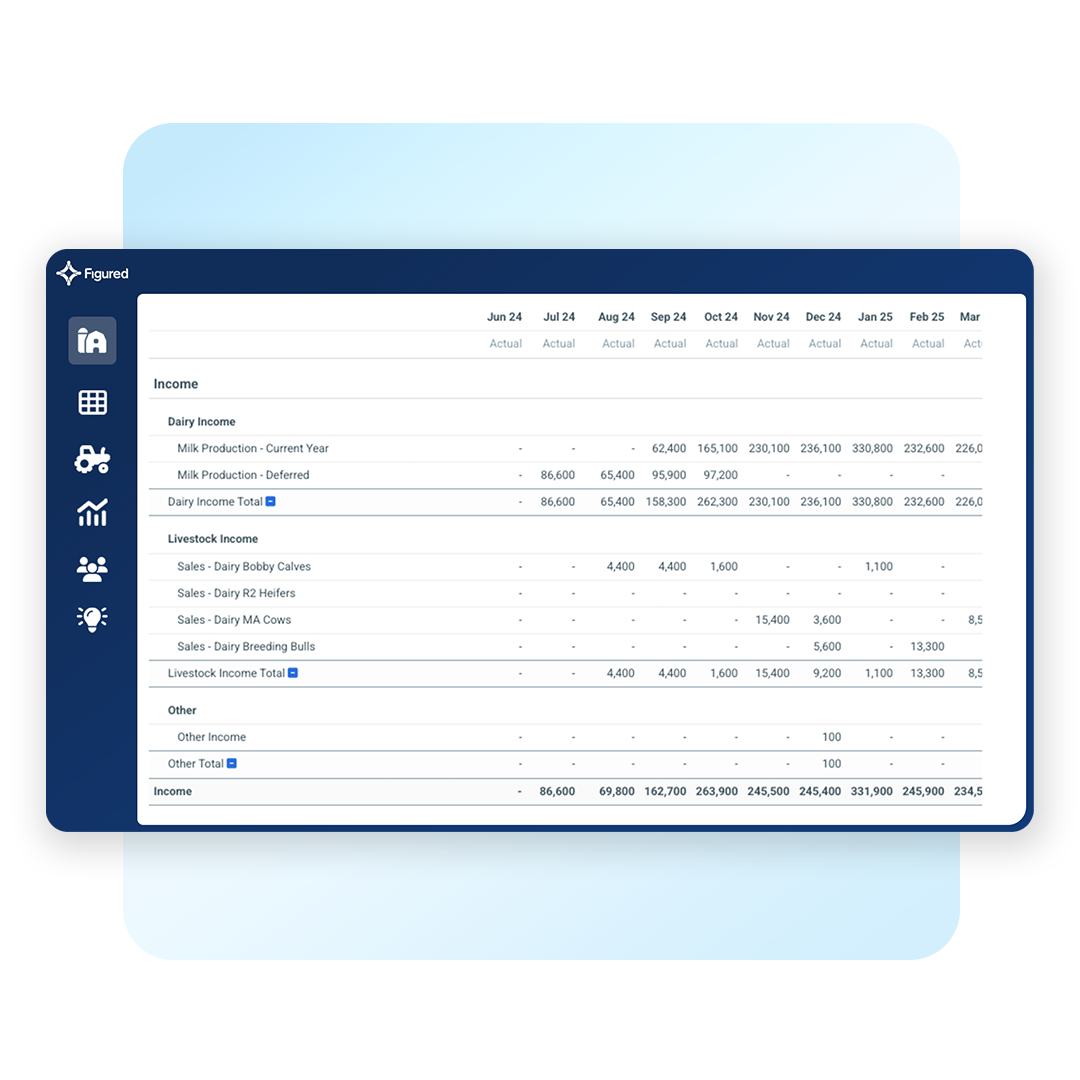
Figured pulls live transaction data from your clients’ Xero, QuickBooks Online, or MYOB account and maps it into a financial structure built for agriculture.
Farm income categories, production accounts, and seasonal breakdowns sit in place from the start, shaped around how each farm type operates. Open a client’s accounts at EOFY and everything is where you’d expect it.

Farm Reporting
Figured offers the full range of financial reports an accountant would need each year, building P&L, balance sheet, cashflow, and variance reports from today’s farm data at the click of a button.
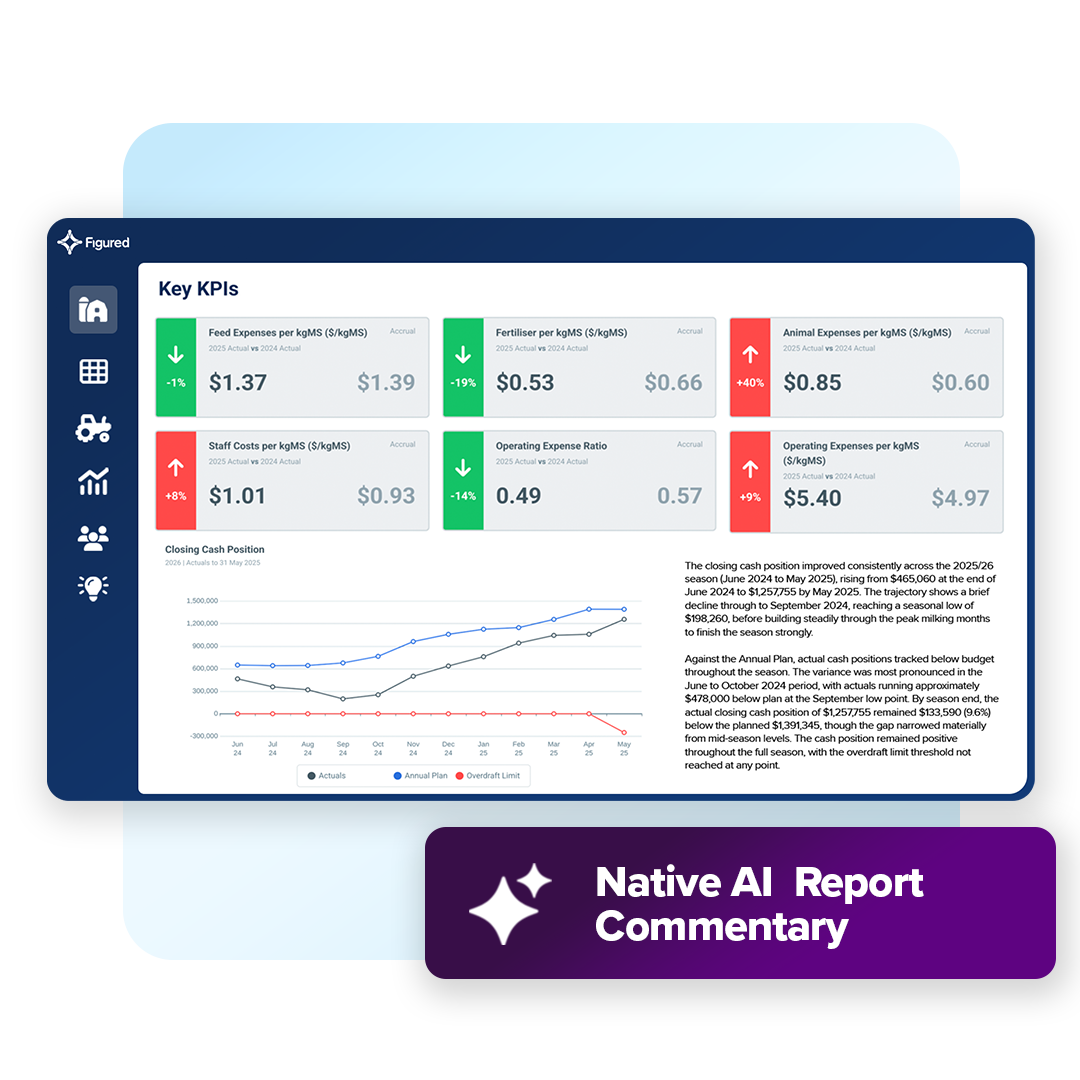
If you need to create supplementary reports for a farmer, trust, governance board, or lender, Reporting Studio gives you full control over how you structure and present that information. Customise highly visual report templates at the organisation level and open them at the farm level, with the data populating itself. Auto Analyst then writes the commentary for you, saving you time and helping you scale this service across more clients.

Beyond Compliance
Great advisory conversations have always been held back by missing or out-of-date data. If you have to reassemble the picture every time you want to catch up, the work just doesn’t scale.
In Figured, that work is not only possible, but more scalable than ever before.
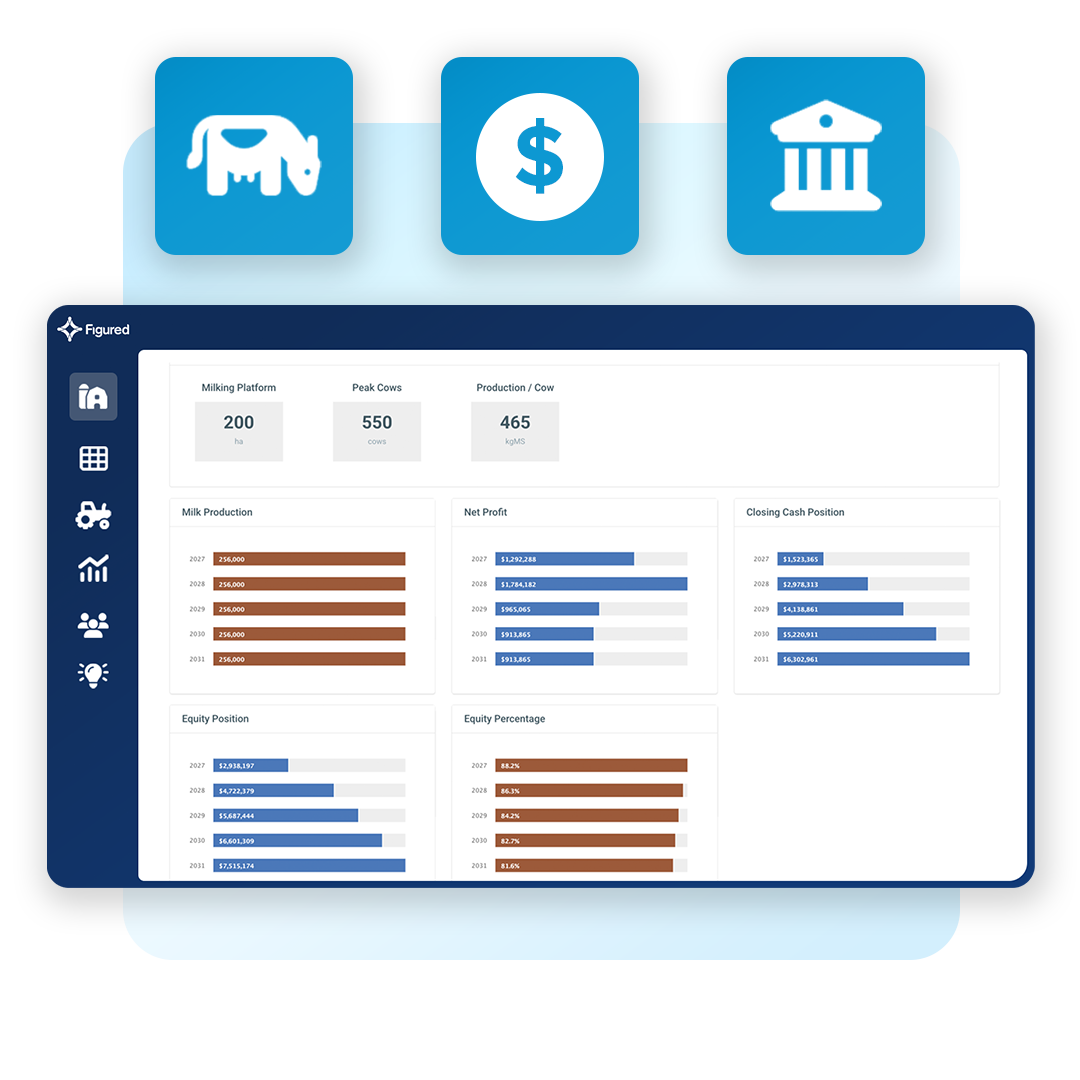
Figured’s agri-specific structure, live integrations, and AI-supported automation takes on more of the manual work so that you can spend more billable time planning, building scenarios, and talking to clients about their position. Plus, having Reporting Studio and succession planning tools in the same platform lets you expand your offering to include even more services — without changing workflows.

Compliance is now a by-product of having a system that does stuff properly. So because the admin and compliance is taken care of [in Figured], we can spend more time helping clients look forward.
We think Figured is a great tool for the financial management reporting side of things. It allows the opportunity for us to help clients establish a great structure around their financial reporting system that actually gives them meaningful information out the other end.
I didn’t have a lot of confidence in my spreadsheet and my formulas. Whereas with Figured, I know they’re all over that. It gives me a lot more confidence to know that the actual figures being pulled through are correct — and they’re getting pulled through in real time.
Integrations
Xero
Accounting
MYOB
Accounting
AgriWebb
Farm Management
Agworld
Farm Management
FarmIQ
Farm Management
Xero
Accounting
MYOB
Accounting
AgriWebb
Farm Management
Agworld
Farm Management
FarmIQ
Farm Management
Xero
Accounting
MYOB
Accounting
AgriWebb
Farm Management
Agworld
Farm Management
FarmIQ
Farm Management
Trev
Farm Management
Farm Source
Dairy Processors
Synlait
Dairy Processors
Open Country
Dairy Processors
Miraka
Dairy Processors
Westland
Dairy Processors
Trev
Farm Management
Farm Source
Dairy Processors
Synlait
Dairy Processors
Open Country
Dairy Processors
Miraka
Dairy Processors
Westland
Dairy Processors
Trev
Farm Management
Farm Source
Dairy Processors
Synlait
Dairy Processors
Open Country
Dairy Processors
Miraka
Dairy Processors
Westland
Dairy Processors
Livestock compliance rests on two things: the stock has to reconcile, and it has to be valued correctly.
In Figured, every birth, death, purchase, and sale is recorded by stock class as it happens via AgriWebb, so opening and closing numbers tie together without an EOFY rebuild. Trading statements and stock reconciliations run straight from that record, whatever valuation method your practice applies.

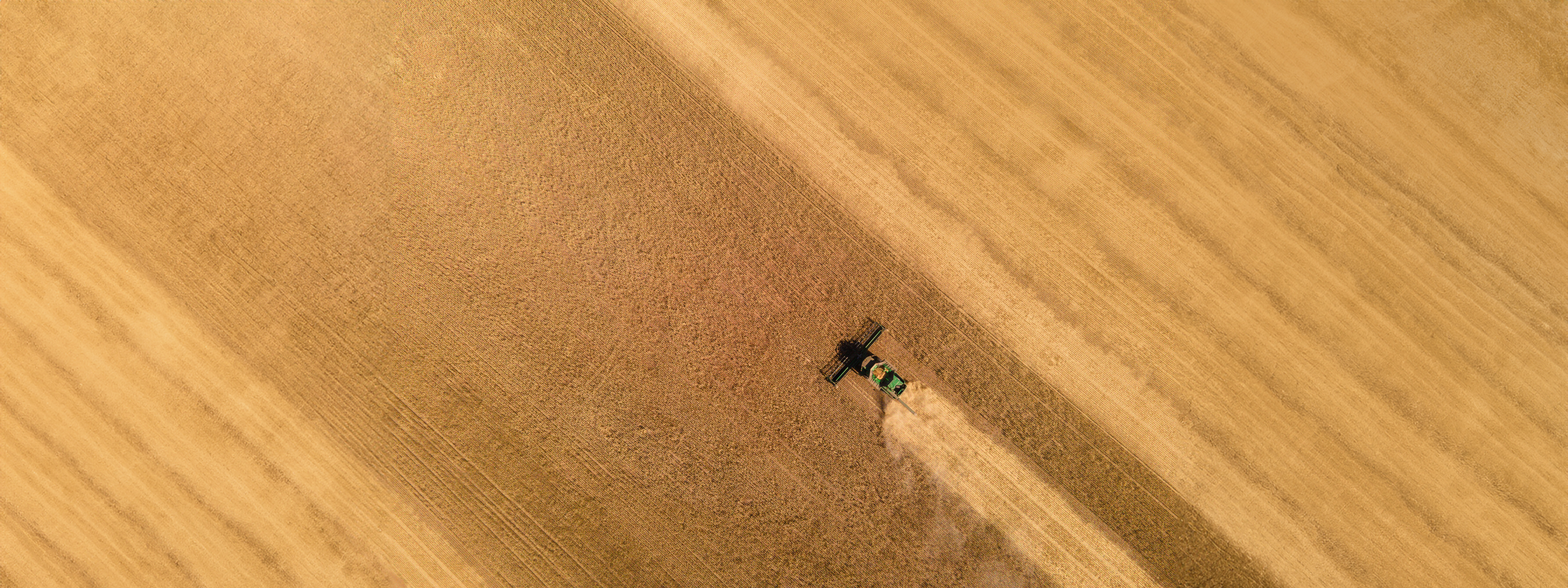
On a cropping farm, the compliance question at EOFY is what’s still sitting in the shed. Unsold grain, plus the seed, fertiliser, and chemical on hand, all have to be valued as closing stock.
Figured’s Inventory Tracker holds both through the season, so those valuations stay current. The Crop Tracker records what was grown, harvested, and sold by crop type or paddock, and the Allocator assigns costs to the right crop season even where one cost spans several crops.
By EOFY, the farm’s true position should be clear.

For accountants serving not only farming operations, but non-farm commercial entities too, Figured’s Commercial Manager extends the same planning, forecasting, and reporting workflow to the rest of your portfolio.

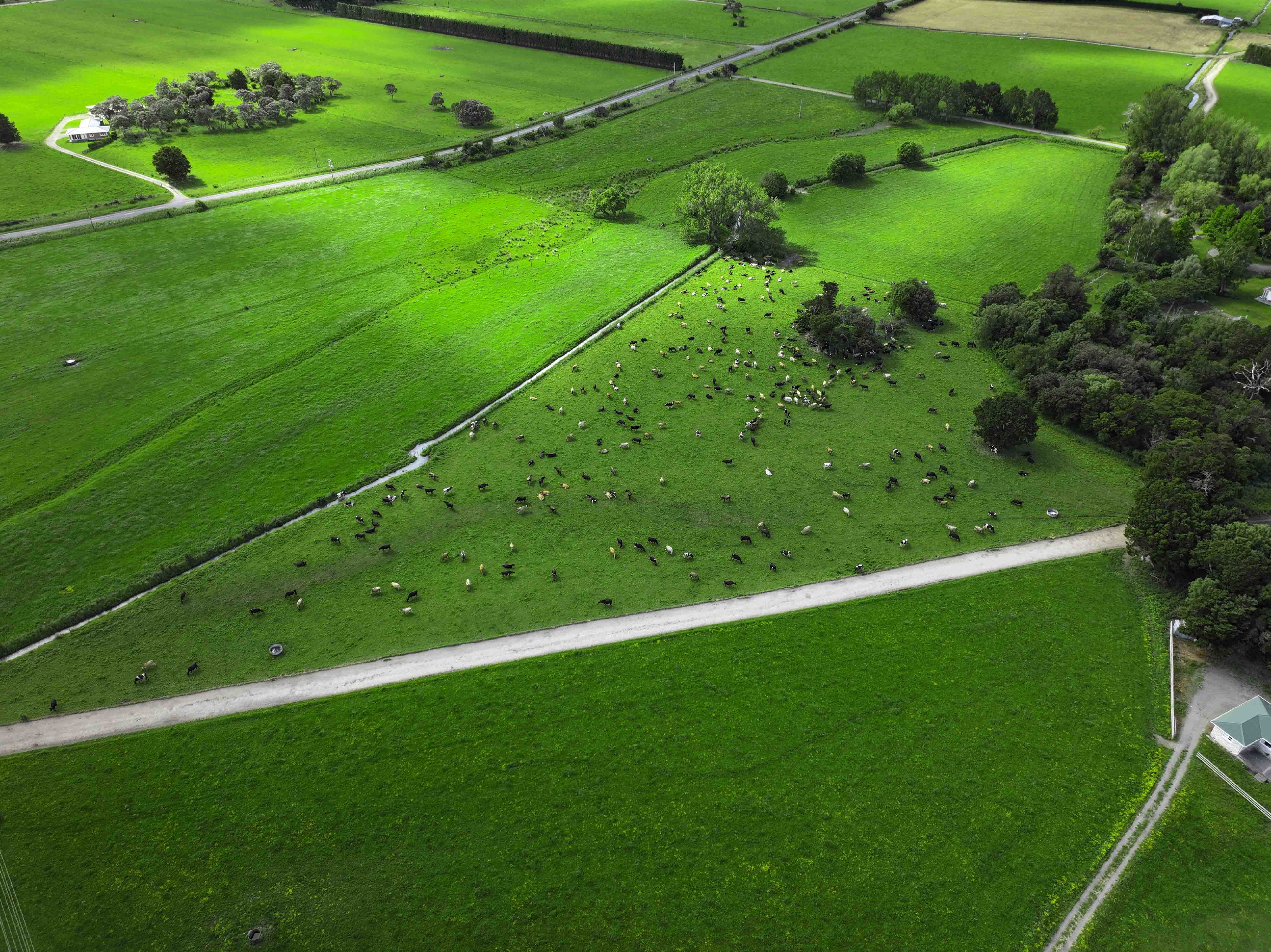
For any situation where a client runs several operations under a single trading entity, Figured Multi-Farm splits that accounting file into separate farms, using the tracking categories already in Xero, MYOB, or QuickBooks Online. This way, each operation carries its own trackers and closing valuations while the client files one return.
It also leads to one streamlined chart of accounts across the business, with the same account codes reused across every farm. Where a client group spans several accounting files, Multi-Entity consolidates those farms into a single reporting group.

Earn recognition for the advisory work you’re already doing — and get found by the farming clients looking for an adviser who knows Figured.


Resources
Questions
No. Figured sits on top of your existing workflow, integrating with Xero, QuickBooks Online, or MYOB. It doesn’t replace anything.
It’s all about enhancing the data you have to work with, and making it more agri-specific. Actuals flow in from your accounting software, and Figured adds the agricultural layer: production tracking, financial categorisation, and the planning and reporting side.
Your practice keeps the accounting software it’s used to, your clients match what you’re doing on their end, and Figured ties it all together.
Figured can be set up any time of year.
When a new client comes on board, you’ll need to enter the opening values for their position as at the date you’re starting, and once that’s done and all the integrations are set up, Figured tracks movements and cashflow from there.
Our team is here to support you through each step of the onboarding process, whether you’re signing up to Figured for the first time or need help as a veteran. You can contact our Customer Success team whenever you have questions, and our Help Centre is packed with useful articles on integrations, setup steps, and product information.
Visit the Help Centre.
The core EOFY outputs from Figured are the financial reports: P&L, balance sheet, and cashflow, drawn directly from the live data that you and your clients have maintained throughout the year.
Alongside those, Figured produces the production and inventory reconciliations relevant to a client’s farm type, including inventory valuations and reconciliation summaries for cropping clients with unsold grain or inputs on hand, and trading statements and stock reconciliations for livestock clients. Each ties back to their accounting software, so the numbers in Figured and the numbers in Xero, QuickBooks Online, or MYOB directly reflect one another.
Additionally, closing values and journal entries post back to the accounting software from Figured. And for accountants using Reporting Studio, all of these outputs can be produced in a highly visual, branded format — ready to go directly to the client or to a third party.
Figured keeps your clients’ stock position current all season, so EOFY valuation isn’t a reconstruction exercise.
AgriWebb-fed movements — births, deaths, sales, purchases, ageing, transfers — flow into the Livestock Tracker as they happen, ensuring that quantities and classes are reconciled continuously. Your practice applies whichever valuation approach it uses for each client, working from live, accurate numbers, cutting the EOFY data scramble to find out what happened over the past 12 months.
Figured maintains an audit log that records all major changes made in a farm file, including what changed, and when. For accountants who need to demonstrate that figures were correct at a specific point in time, Figured’s snapshots feature also creates a read-only copy of the farm’s financial plan to be taken at any point during the year. Snapshots can’t be edited after the fact, so they provide a reliable point-in-time record of the plan as it stood.
Once EOFY compliance is complete, a lock date prevents any changes to Figured actuals prior to that date — the same mechanism used in Xero. After that point, the historical record is protected from retrospective amendment.
It’s worth noting that the primary transaction record sits in the accounting software — Xero, QuickBooks Online, or MYOB — which carries its own audit trail. Figured holds the farm-level management data, the production reconciliations, and the compliance outputs that feed into the tax return. Both layers of documentation are accessible and reproducible if an ATO query arises.
Absolutely. Figured is the platform for all of your agri services, and many practices find the advisory work follows naturally once the compliance foundation is right within Figured.
Effective, scalable agri advisory that can be provided timely enough to matter needs current, year-round data and a structured platform, which Figured provides. When both are in place, running a mid-year reforecast or walking a client through a scenario comparison is a straightforward next step. The financial picture that underpins the tax return is the same one you use for a planning or succession conversation.
Most practices run a mix of clients. Figured Farm Reporter covers the clients where compliance and reporting is the whole job. Farm Manager then adds budgeting, cashflow forecasting, and variance reporting for those clients where you want to add more value as their accountant.
See Figured Products.